CEESA Middle School Speech & Debate Tournament 2025
Upasana Samantray
International School of Helsinki
Published:
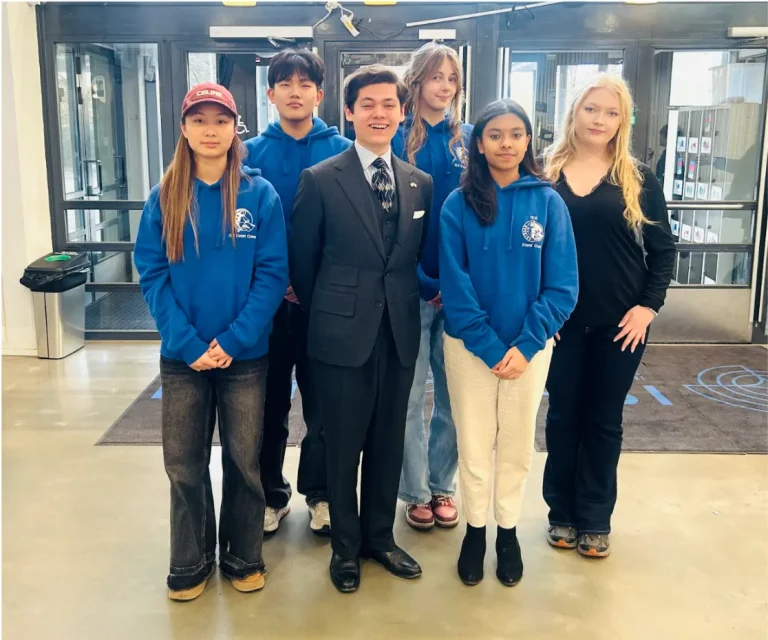
The Central and Eastern European Schools Association (CEESA) Middle School Speech and Debate took place from 14-15 November, bringing together eight CEESA schools for a two day tournament. A total of 77 international students participated across five speech and debate categories. The tournament was also supported by a dedicated team of nearly 40 student volunteers who served as the ISH Event Crew. For the first time the tournament featured student-judges working alongside teacher coaches, staff members and volunteer parents. Our eight student-judges took part in both in-person and online training, in which they went through specific event regulations, judging ballots and grading criteria. The student-judges also got some practical training judging our MS speech and debate showcase.
The student-judges found this experience truly rewarding. Here are some opinions and thoughts from the student-judges regarding this new initiative.
A grade 12 student, Lilya, served as an Oral Interpretation and Duet Acting judge. With six years of speech and debate experience, she described the event as “incredibly resourceful” because it helped her understand “how judges really think through the grading and criteria,” and made her pay closer attention to “what makes something good versus extraordinary.” She said the most rewarding part was “knowing that I am helping these students become better performers through my comments.” The most challenging aspect, she noted, was “lowering my expectations for a different audience” and recognizing “the different bounds of what middle school students can do.”
Ella, a grade 11 student, served as a student judge for Oral Interpretation and Impromptu. With seven years of speech and debate experience, she said she “really enjoyed the judging experience,” adding that “it was great to watch all the kids work really hard and create really great pieces of work.”She shared that the most rewarding part was “watching these kids support each other – if their friend got upset they were there for them, and they celebrated each other’s wins.” The most challenging part, she explained, was “making sure you weren’t being too harsh or too nice, but pushing them so they could do better in the future.”
Kyan, a grade 12 student, served as a student judge for Original Oratory, Oral Interpretation, and Impromptu. With two years of speech and debate experience, he said, “I found it really enjoyable, because as someone who’s been in these kids’ shoes, I have a lot of empathy for them.” He joked that he “must be the only one,” since he thought he was being harsh but “apparently I am quite generous.” He shared that one of the most rewarding moments was “to see a student who might be quite nervous still deliver a very strong speech.” A challenge, he noted, was “aligning with some of the judges, because we don’t always see eye to eye, and I have to talk them up or talk them down.”
Some of the 23 coaches from different CEESA schools shared that this opportunity to work alongside students as judges was both inspiring and impactful. Here is what they had to say about being part of this new initiative.
Sarah, from AIS Vienna, said that she felt the judging experience “went extremely well,” explaining that ISH “did a really great job in preparing the student-judges beforehand” with the training sessions. She also praised the involvement of experienced high school students, noting that she was “very impressed that you recruited some of your high schoolers” with most 11th and 12th graders as well as a couple experienced 10th graders. She continued by saying that student-judges “were able to critically evaluate according to the rubric” because they “read rubrics all the time and assess themselves against them.” as a part of their IB-studies. Sarah also said that the student judges she observed “conducted themselves very professionally” and were “highly organized and effective”. Looking forward, she strongly recommended continuing and expanding the student-judge initiative.
Simon, from TISA Baku described the experience as “really rewarding,” saying he enjoyed being able to “dialogue with some students who come from a background of having done speech and debate themselves,” noting that they “bring expertise” and are “keen to learn and to share their ideas.” When asked about areas for improvement, Simon said that, like anyone, students could continue developing communication skills and empathy for contestants, but overall he felt they “showed a maturity and responsibility that probably puts them on par with most of the teacher judges anyway.” He added that he would “absolutely” recommend students from his own school to apply as judges if the initiative expands, saying he has been “really impressed by the student volunteers” and that it is something their coaches hope to “promote at our school.”
This pilot of introducing student-judges hopefully marks a small but meaningful change in the speech and debate programs. Teacher coaches who observed that the experience helped students look at the activity from a different angle and better understand what strong communication really looks like. Their feedback reflects a generally positive start to this new approach, suggesting that student-judging could become a useful addition to future CEESA middle school speech & debate tournaments.