AAS Sofia Cross-Divisional Collaboration: Senior Psychology Students Teach Younger Students about Stress

Anglo-American School Sofia
Published:
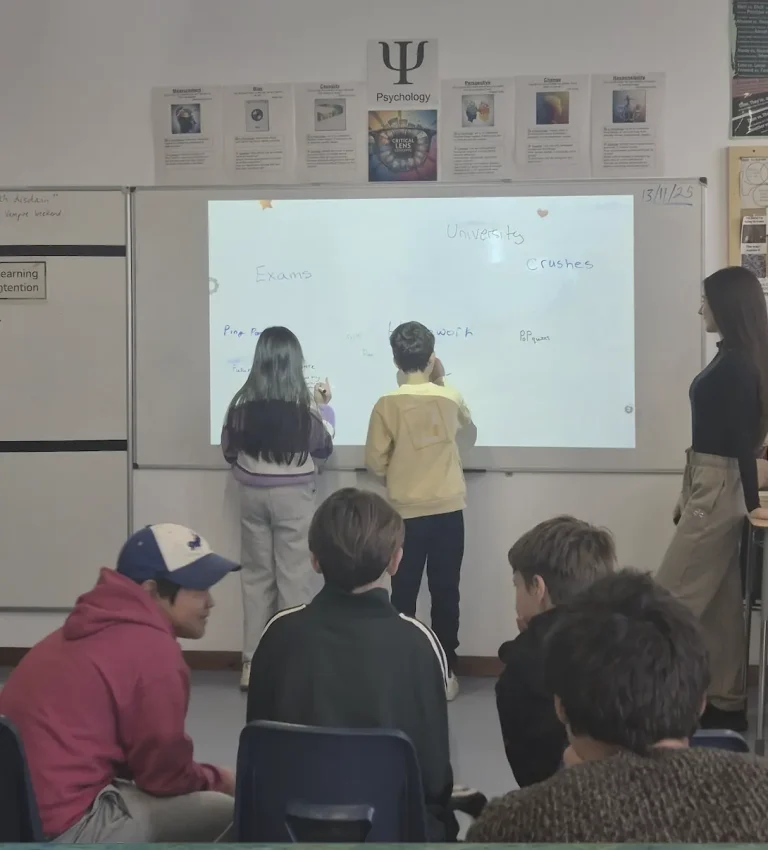
Grade 12 IB Psychology students planned for and taught grade 6 students about stress and stress management. Synthesizing their own learning about stress and sharing that in a developmentally accessible format was powerful cross-divisional learning for both groups of students.
I sat down with a small group of students to interview them about their experiences in this learning.
Grade 12: How did preparing for this help you understand your own attitudes and ideas?
Isabella (12): I had the urge to explain everything, but our teacher reminded us that we needed to simplify it. The experience of simplifying and synthesizing helped me solidify it in my own mind and helped me even apply it to myself. For example, I’m telling students to be forgiving and kind to themselves, but I’m not always doing that when I’m stressed. So preparing for it and teaching it reminded me to apply these things in my own life when I’m feeling that stress.
Lora (12): Yes, thinking about the examples from when I was in sixth grade was helpful because right now, they feel like nothing, but then, in sixth grade, they felt like everything. I recognize that I have similar stress responses now as I did in sixth grade. But because I can look back at those experiences and share them with younger students, I also know more about the nature of stress now, so I can remind myself that it’s temporary.
What was the power of this experience across the different age levels? How was this different from hearing it from a teacher?
Isabella (12): I think having the pictures and stories from our sixth grade experience made it more relatable; it was easier for them to connect with us as students.
Lora (12): It’s possible to imagine for both us and them, that we are in their age group. I remember sixth grade, so I can see myself being in their shoes. And because they’re closer to us in age, they can imagine being in my shoes. When I was in middle school and my parents would give me advice, I thought “you just don’t understand.” But I
remember those things felt serious to me when I was their age and they related to that coming from us as 12th graders.
Alexander (6): I learned so much, now we have ways to manage our stress, we have strategies like take a minute, do a hobby, take a breath, and we feel like we have someone to talk to if we have stress. Hearing this from students was better than from a teacher, because they know what they are talking about because they’re young, like us.
Ethan (6): Just giving ourselves a mindful moment can help us refocus. You also helped us understand that it is very unhealthy to compare ourselves to others and we shouldn’t overthink every situation, because it’s not that serious; it’s just in our heads and we can
change the way we think about it. By students teaching us, we get new perspectives about how our 6th grade experiences are like theirs were and we learn about how they did it.
What was the biggest take away from this experience?
Isabella (12): It’s really good to teach other people, it’s fulfilling to know that I’ve helped younger students feel ok about something that can be really hard. I feel like we really helped younger students learn how to learn about stress and how to manage it.
Lora (12): For me, I’ve recognized that I can look at the ways that I’m handling my own stress. When I recently found myself going through a period of extreme stress, I actually thought, “what, what would I say to a sixth grader?” and then follow my own advice. It’s really powerful to know that we helped younger students; it’s important to share what we know with others.
Artemis (6): I actually knew a lot of the facts about stress, but I didn’t know that “Fawn” (or trying to please others) was one of the “freeze, flight, fight” responses to stress. But I wouldn’t say that’s the most important take away. It’s a good fact to know, but the most important thing is knowing that there are other people dealing with it, that it’s normal and part of life; we can all learn coping strategies, but the hard part is in the moment, getting yourself to open your tool kit. When a teacher teaches you something or gives directions, you can have a great relationship with a teacher, but they’re your teacher. When it comes to more personal or challenging things, it’s harder to share – with a 12th grader, even though you might not know them, them sharing their experience and being open to you, makes it easier to do the same.
This is such a powerful example of authentic cross-divisional learning and community building, and is something about which all students agreed: they want more of.